
The Gyanvapi case, centered around the Gyanvapi Mosque in Varanasi, has been a subject of contentious debate, with multiple petitions filed in various courts. This blog delves into the history and current developments of the case, discussing its political and religious implications.
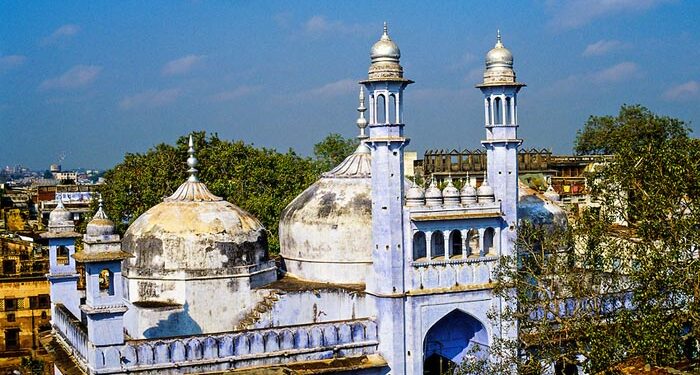
A Historical Dispute: The controversy traces its roots back to 1991 when a group of priests in Varanasi filed a petition seeking permission to worship on the premises of the Gyanvapi Mosque. This petition was followed by several others before the Supreme Court, Allahabad High Court, and the Varanasi district court. The crux of the dispute lies in allegations that the mosque was constructed by Mughal emperor Aurangzeb by demolishing the Kashi Vishwanath Temple in the 16th century.
The Legal Battle: In December 2019, after the Supreme Court verdict on the Babri Masjid-Ram Janmabhoomi title dispute, a Varanasi-based lawyer named Vijay Shankar Rastogi filed a petition in the lower court, challenging the legality of the Gyanvapi Mosque’s construction. Rastogi sought an archaeological survey of the mosque to determine its origins. The Varanasi court ordered the Archaeological Survey of India (ASI) to conduct the survey and submit its report.
Contested Survey and Legal Hurdles: The Uttar Pradesh Sunni Central Waqf Board and the Anjuman Intezamia Masjid Committee opposed the survey and the Varanasi court’s order. The matter reached the Allahabad High Court, which stayed the ASI’s survey on the grounds that the Places of Worship Act, 1991, prohibits any change in the religious character of a place of worship from how it existed on August 15, 1947.
The Shivling vs. Fountain Controversy: During the survey, the Hindu side claimed that a ‘Shivling’ was found inside a reservoir on the mosque complex, while the Muslim side dismissed it as a ‘fountain’. This further intensified the dispute and solidified the stands of both parties involved.
The Places of Worship Act: The controversy also raised questions about the Places of Worship Act, 1991, which seeks to maintain the status quo of religious places as they existed on August 15, 1947. The Act, however, exempts the Ram Janmabhoomi-Babri Masjid case, adding to the complexity of the Gyanvapi case.
Political Implications: The Gyanvapi case has political ramifications, with various Hindu outfits using it as a rallying point ahead of the 2024 Lok Sabha elections. The issue has the potential to influence majority Hindu support, making it a critical subject in the political landscape.
The Gyanvapi case remains a contentious and sensitive matter, intertwining history, religion, and politics. As it continues to unfold, it warrants careful consideration and resolution, keeping in mind the diverse perspectives and sensitivities involved. Only through an open and inclusive dialogue can a constructive resolution be reached, respecting the nation’s secular ethos and preserving its rich cultural heritage.